
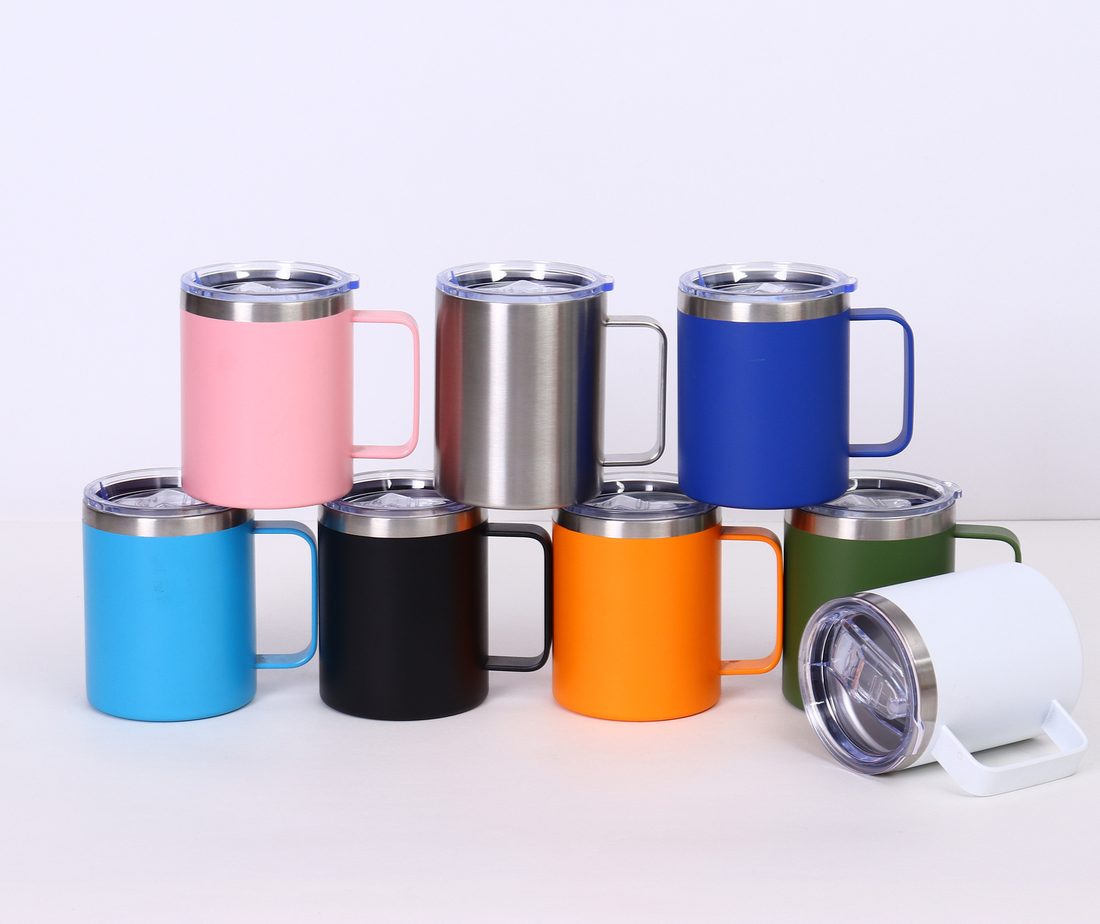
Silk screen vs laser vs sublimation: choosing a logo method for drinkware
A practical comparison of the five decoration methods used on stainless steel tumblers — cost, durability, colour range and when each one fails.
Read article →
Almost every custom drinkware quote comes with a minimum order quantity, and almost every buyer asks the same question: can we start smaller? The answer depends on which part of the order is driving the MOQ.
Three things set it: the decorative process, the colour, and the packing. Silk screen and laser branding cost little to set up, so they rarely push the MOQ up. Heat transfer and sublimation need a printed film or transfer per design, so a new design carries a setup cost that has to be spread over enough pieces. A new powder-coat colour has a minimum batch at the coating line. Custom retail packaging has its own minimum at the printer — often higher than the cup itself.
Do not ask only for the MOQ — ask what sets it. A useful question is: “If we change the colour, the logo method or the packaging, how does the MOQ change?” A supplier who answers that precisely is telling you they know their own production line, which is a good sign for the rest of the order.
A lower MOQ usually means a higher unit price, because setup is spread over fewer pieces. If your first order is small, expect to pay more per piece and treat it as the cost of market testing rather than the price for scaling.
A practical comparison of the five decoration methods used on stainless steel tumblers — cost, durability, colour range and when each one fails.
Read article →
From colour box to carton mark: the packaging decisions that affect your landed cost, your marketplace photos and your damage rate.
Read article →
Double-wall vacuum, the tests that actually catch defective units, and the claims you should not put on your packaging.
Read article →